Q-SYS

Read blogs to get latest insights of our industry.

Digital Signage & Iptv: Modernizing Visitor And Patient Experience In Healthcare

Digital signage is a game-changer in the healthcare industry, providing a cutting-edge way to enhance the visitor and patient experience. In today’s world, providing a positive experience for patients and visitors is more important than ever, and digital signage is the tool to make it happen. Digital signage in healthcare is about more than just providing information – it can also enhance the patient experience. Digital signage can be used to display entertainment options, such as television shows and movies, helping to provide a welcome distraction from the medical environment. It can also be used to display uplifting messages and inspiring images, creating a more positive and welcoming atmosphere in the hospital. In short, digital signage is changing the face of healthcare, providing a dynamic and engaging way for hospitals to communicate and connect with their patients. It’s an exciting development, and one that is set to revolutionize the way that healthcare is delivered. Benefits of digital signage and IPTV in healthcare Enhanced communication and information sharing Digital signage in healthcare is like a brightly shining beacon in a sea of information, guiding patients and staff alike to the information they need. With the ability to quickly and easily display real-time updates and customized information, digital signage ensures that everyone is always in the know. Gone are the days of outdated flyers and confusion over clinic hours. With digital signage, healthcare facilities can display the most current information, from wait times and appointment schedules to health tips and alerts. But digital signage in healthcare isn’t just about sharing information. It can also create a more interactive and engaging experience for patients. Imagine a digital sign with a touch screen that allows patients to access their health information, provide feedback, or even take a virtual tour of the facility. Improved wayfinding and navigation In a large hospital or healthcare facility, it can be easy for patients and visitors to get lost or confused, especially if they are unfamiliar with the layout of the building. This can cause frustration and anxiety, and can even lead to delays in receiving medical treatment. Digital signage can help to solve this problem by providing real-time updates and interactive maps on screens located throughout the facility. This can make it much easier for patients and visitors to find their way around the hospital, without having to ask for directions or rely on outdated printed materials. In addition to providing information about the location of different departments and facilities, digital signage can also be used to display wait times for appointments and other important information. This can help patients and visitors to plan their time more effectively thus reducing the stress and uncertainty that can come with a visit to the hospital. Increased engagement Digital signage in healthcare is not only a useful tool for sharing information, but it can also increase engagement and satisfaction among patients and visitors. With its ability to display interactive content and real-time updates, digital signage can provide a more engaging and dynamic experience for those in a healthcare setting. For example, a digital sign with a touch screen could allow patients to access their health information, provide feedback about their experience at the facility, or even take a virtual tour of the facility. This added level of interaction can help to keep patients and visitors engaged and interested, leading to a more positive overall experience. In addition, digital signage can be customized to meet the specific needs of a healthcare facility and its patients. For example, a hospital could display information in multiple languages to accommodate patients who speak different languages. This level of customization can help to improve the patient experience and increase satisfaction. Choosing the right technology and provider As a healthcare provider, choosing the right technology and provider for your digital signage solution is crucial. Not only does digital signage help improve the patient experience, but it can also streamline communication and improve efficiency within your facility. When it comes to choosing the right technology for your digital signage solution, one of the key things to consider is the type of displays you will use. In a healthcare setting, it’s important to choose displays that are easy to clean and maintain, as well as durable and reliable. Touch screen displays can also be a great option, as they can provide patients with easy access to important information and help reduce the spread of germs. Another important factor to consider is the content management system (CMS) that will be used to manage and update your digital signage content. In a healthcare setting, it’s important to choose a CMS that is user-friendly and easy to use, as well as secure and HIPAA-compliant. This will ensure that your digital signage solution is both effective and compliant with industry regulations. Conclusion If you’re looking for a digital signage solution that offers all of these features and more, we recommend checking out Q-SYS. Q-SYS offers a comprehensive digital signage solution that includes a user-friendly, HIPAA-compliant CMS, flexible display options, and excellent customer support. Plus, with Q-SYS, you can be confident that you’re working with a provider that has experience working with healthcare providers and understands the unique needs and challenges of the industry.

Digital Signage & Iptv: Modernizing Visitor And Patient Experience In Healthcare Read More »

Queue Management System Features Your Business Needs

As the customer flow in your business increases, you quickly realize the need for a queue management system that enhances the customer experience but also improves operational efficiency. But with so many options on the market, how do you know which features are right for your business? In this article, we will go over the essential features your business needs in a queue management system. By the end, you will have a better understanding of what to look for when shopping for a queue management system for your business. Self-Check in- Kiosks The queue management system check-in kiosk provides a convenient way for customers to effortlessly join virtual queues without any assistance. Self-service kiosks lead to shorter wait times – Customers can check in independently, bypassing the usual wait period and taking control of their own queue placement. Additionally, self-service kiosks allow customers to take care of their registration, which noticeably reduces the strain put on your counter staff resulting in saved time and costs. Overall, kiosks allow for seamless check-ins without the need to flex your operational resources. The Kiosks can be customized to reflect your brand. This helps you achieve a unified service vision and raise brand awareness. Virtual queuing A fair, fun and rewarding queuing experience is only possible with a good queue management system in place. Virtual queuing eliminates the need to waste time standing in physical queues altogether. It allows visitors to queue anywhere in the facility as they wait for their turn to be served. The service providers can update their customers via text or digital signage resources displayed in strategic locations within the organization. Extensive Insights & Analyses Queue management systems that provide insights into customer behavior, preferences and resource usage can help improve your business decision-making. The live reporting system and manager dashboards are integrated with the different facets of the queue management system, forming a complete business intelligence module. Your QMS should be capable of extracting and analyzing comprehensive insights in terms of customer flows, staff performance, and service area efficiency. The system administrator can access real-time information on queue status, the number of active counters, issued tickets, waiting time information, serving time information, and many other metrics. Benchmark timing for service or waiting can be monitored and a notification is triggered to the system administrator every time this is exceeded. Ease of configuration and personalization Different businesses and organizations have different requirements, as do their customers. A solution that works for one organization might not be suitable for another, so the solution should be configurable to manage all the different requirements. This includes, but is not restricted to, average serving time, the number of staff and the shift patterns they work, the average number of customers served daily, and the nature of the service you provide. When choosing a queue management system, it is also important to consider how well the system’s user interface aligns with your brand’s identity. A solution that is easy to customize is always a plus. Centralized management A modern queue management system with a centralized dashboard can be operated from any location at any time, giving you equal accessibility and visibility regardless of your geographical location. The Q-SYS dashboard for instance provides you with the tools necessary to manage your queues, as well as a broad overview of your locations’ performance. From the dashboard, you can easily view their previous service interactions in their history log, call them up for service on priority, move them to a different service line, or assign them to a new service clerk. on an administrative level, you can manage accounts, team performance, and individual access rights. Real-time monitoring It is imperative to not only manage queues but also to be aware of the current situation at your business location at all times. A queue management system with real-time monitoring capabilities can help you track staff and customers activities easily. Additionally, a digital queue management system allows you to monitor location activity remotely, as long as you have an internet connection. This, in turn, enables quicker implementation of new service and business processes and provides the ability to deliver a unified customer strategy across all your outlets. Your customers can also take advantage of real-time monitoring by keeping track of their queue status through the counter display. Customer service reports It is essential that customer service measures are not overlooked in any way, they are critical for improving the customer service quality. Therefore, your queue management system should assist in collecting information that can offer valuable insights into areas of improvement. The availability of this essential data promotes more informed and effective decision-making within organizations. Queue management system reports may include:● Service Metrics● Staff Performance Implement a modern Queue Management System A queue management system can do wonders for your business, it can help you manage your resources more efficiently, improve customer satisfaction, and even increase sales. There’s no drawback to implementing a queue management system, but choosing the effective one becomes essential. If you are looking to improve your customer service and efficiency with a queue management system that checks all the boxes, the Q-SYS queue management system is a great place to start.

Queue Management System Features Your Business Needs Read More »

Tips for an Effective Customer Experience Survey

Customer experience surveys are a key part of any customer-centric business. They provide valuable insights that can help businesses improve their products, services, and overall customer experience. However, designing and administering an effective customer experience survey can be a challenge. To help you get started, here are some tips for an effective customer experience survey that will take your business to the next level. Keep It Short It is essential to maintain a low survey abandonment rate, and overall survey length is a significant factor in this. Try to recall the last time you enthusiastically answered a 30-minute questionnaire – it probably never happened. Your goal is to be clear and concise, asking the question in the shortest way possible without compromising its intent. Simply lowering the character count will not do the trick – You must also eliminate any unnecessary wording from your queries. Only Ask Questions That Fulfill Your End Goal As a business, you need to be highly decisive when it comes to getting rid of extra questions in your surveys. Make sure that every question you include serves a well-defined purpose and there is a strong justification for its inclusion. If not, get rid of it. Questions that you think “couldn’t hurt to ask” only lengthens your survey needlessly — something that might prompt survey respondents to abandon it entirely. For example, depending on the survey’s purpose, it may not matter how a customer first came in contact with your site. If that’s not relevant information, don’t ask about it. Do you really need to know a customer’s name? If not, don’t include that question. Consider Smart, Open-Ended Questions It may be tempting to stick with multiple-choice queries and scales, but some of your most insightful feedback will come from open-ended questions that allow customers to express their true thoughts. However, nothing makes a survey more daunting than a large text box next tothe very first question. It’s best to ask brief questions first and create a sense of progress. Then give survey takers who have made it to the closing questions the opportunity to elaborate on their thoughts. Make Rating Scales Consistent Scales commonly used for surveys can become unwieldy and confusing when the context begins to shift. For example, The directions for the survey you are taking tell you to respond to the initial questions by choosing a number between 1 and 5, with 1 meaning “Strongly Disagree”and 5 meaning “Strongly Agree.” Later in the survey, you are asked to evaluate the importance of certain items. The problem is that 1 is now being used to mean “Most Important,” but you had been using 5 to mean “Strongly Agree” to every previous question. The above is quiteconfusing. How many people accidentally gave wrong responses as a result of this change? Harmonizing your scales will result to more accurate feedback. Avoid Leading And Loaded Questions Questions that lead respondents to a particular answer due to biased phrasing will not give you accurate or useful feedback. For example, asking questions along the lines of “We have recently upgraded Q-SYS features to become a first-class tool. What are your thoughts on the new site?” is a clear case of letting pride in your product get in the way of asking a good question. Instead, the more neutral, “What do you think of the recent Q-SYS upgrades?” would likely elicit more helpful and honest feedback. Make It Mobile-Friendly In today’s mobile-friendly society, you will touch more consumers if you formulate mobile- compatible surveys that can be completed on any handheld device either via text or through a portal. Mobile devices make it possible for you to document the customer experience while it is still fresh, collecting valuable insight in the moment. This real-time feedback is 40% more accurate and reliable than feedback gathered 24 hours later. Making your survey mobile-friendly will enhance consumer experience and boost response rates. Avoid Assumptions You are very likely to encounter difficulties when you create questions under the assumption that the customer is already knowledgeable about the subject matter (unless you confine your survey to a very select group of people). One major culprit is the language and terminology you use in questions, which is why we recommend avoiding industry acronyms, buzzwords and jargon, or references. Don’t Go Overboard While it may be tempting to want to pick your customer’s brain about every aspect of their experience when they are engaged in a survey, remember that your customers are busy people. If your survey takes too long, they may abandon it entirely which means you will not get the feedback you need. Your in store customer feedback survey should be brief and to the point. Establish Policies and Practices to Put Feedback Into Action Collecting feedback is only the first step. If you do not use that feedback to create customer- guided retail experience solutions, you will not be profiting from it. Do not disregard customer feedback if it is not what you wanted to hear or if it highlights difficulties that cannot be easilyfixed. Designate a team within your company to be in charge of surveying and introducing projects that aim to resolve the problems your customers are having. Conclusion You are guaranteed to develop a retail customer experience survey that collects the information you want while improving your relationship with your consumers by borrowing from the aforementioned suggestions. To jump in and get started with your own customer experience survey, book a Q-SYS CX demo and learn how this unique survey tool can transform your business.

Tips for an Effective Customer Experience Survey Read More »

Digital signage solutions for your organizational needs

State-of-the-art digital signage solutions are breathing new life into static whiteboards with their high-definition interactive displays setting the new standard for advertising today. Its wave is proving to be a great relief for companies looking for innovative and dynamic ways to engage customers. With 400% more views than static signs, forward-thinking organizations are reaping big from the use of digital signage. Should your business leverage digital signage? Keep reading to learn more about its advantages in every sector. Healthcare sector Hospitals present a variety of communication challenges for all employees, patients, and visitors. They are often multi-departmental facilities catering to a wide variety of needs and demographics which renders static signs highly ineffective. Unlike static signs, digital signages thrive in such complex environments with their endless opportunities for interaction and communication. For instance, staff-facing digital displays in break rooms and offices can be used for administrative messaging for staff such as reminders about upcoming training, highlighting staff schedules, and display of emergency messages. Meanwhile, waiting room digital screens can show wellness tips, wayfinding information, advertisements and entertainment for waiting patients. In addition to providing an engaging and interactive experience, this also helps to reduce the perceived wait times. Financial sector The financial sector is among the best-positioned sectors to harness the power of digital signage. Images and videos are powerful storytelling devices that can give customers a taste of your company’s offering regardless of location. Bright animations on clear displays give your clients confidence and establish your business as cutting-edge and sophisticated. The ease of content creation and editing makes it easier to manage multiple campaigns for different branches from a central location, this makes it easy to harmonize and streamline branding. To keep customers and staff informed about the latest financial market trends, financial institutions can use digital signage to highlight currency rates, loan and mortgage rates, and stock prices while advertising the bank’s products. Digital signage is also an excellent way of reducing perceived wait times by entertaining customers with videos, slideshows, infographics, and photos. Hospitality Industry As the hospitality industry continues to grow, so does the importance of guest experiences. In today’s competitive market, it’s not enough to just offer a good product or service – you need to go above and beyond to give your guests a memorable experience. Prudent hospitality stakeholders are embracing technological advancements like digital signage to deliver unforgettable patient experiences. Businesses in the hospitality industry can benefit from implementing signage solutions in several ways. Implementations such as self-service kiosks, digital concierge stations, digital directories,and digital menu boards, can transform your establishment into an opulent and tech-forward facility. Other than upselling and cross-selling menu items, digital displays can highlight other services offered by your company, such as guided tours, vehicle rentals, doctor on call, flower arrangements, and baggage storage, as well as draw attention to local attractions. Retail Sector Brick-and-mortar retailers today must overcome many obstacles, such as the popularity of online shopping, retaining customer loyalty in the face of countless choices, supply chain disruptions and heightened customer expectations. The modern consumer expects nothing less than an enriching and personalized experience. Therefore, to survive in such a competitive landscape, business owners need a few tricks up their sleeves. Luckily, eye catchy digital signage solutions offer an ocean of opportunities to reinvent the shopping experience. Digital signage is successfully merging in-store shopping with the allure of technology. Stores are leveraging this technology to support their visual merchandising efforts and cultivate an engaging experience that cannot be replicated with online shopping. The first step is to use eye- catching animations and dynamic content on high-quality screens to attract people to your store. Once they are inside, use fun visuals to engage them and enhance their shopping experience. For example, Interactive displays can show customers pricing information, product benefits, social media feeds, and discounts. They can also let customers explore your catalogue and makeimpulse purchases. Ultimately, digital signage enables retailers by making the customer journey more efficient and exploiting upsell opportunities in-store. Corporate Offices With the immense growth in the expansive business world, digital signage has proven to be an excellent way of communication for customers and team members alike. Organizations have found that digital signage solutions benefit them greatly, especially when it comes to streamlining operations. To encourage employees to stay on track, digital signage displaying KPI dashboards and goals can be placed in sales areas. Organizations may also utilize screens in meeting areas to show the real-time schedule of room availability, while also enabling employees to book rooms at their convenience. For the clients, internal signage solutions allow companies to provide adaptable wayfinding, including welcome screens, check-in stations and company information. What’s more, the presence of informative and entertaining digital signs in reception areas creates a more pleasant experience for clients when they visit your office. Educational Institutions Digital signage can be used to enrich educational institutions by enhancing reputation, increasing engagement and improving their infrastructure. It allows educators and students tostay up-to-date while delivering critical information more quickly and effectively in comparison to traditional methods. Educational institutions can also use digital message boards to display menus in cafeterias and promote events, consequently saving money that would be otherwise spent on printing and updating traditional advertising material. Wayfinding signage can also help reduce confusion by displaying directories and class schedules. By integrating digital signage solutions with a centralized control platform, educational institutions can manage and edit content throughout the campus with ease and efficiency. Conclusion Digital signage is undeniably one of the most useful investments an organization can make in the realm of functional decor. Businesses of every sector can harness the power of this technology to improve customer service, increase brand awareness, and deliver essential information to employees, customers, or students. It is an extremely dynamic versatile tool that can benefit businesses, health organizations, government agencies and educational institutions in ways tailored to their industry. Which is no wonder that it is receiving a lot of attention from

Digital signage solutions for your organizational needs Read More »

Understanding Patient Journeys In Healthcare Management

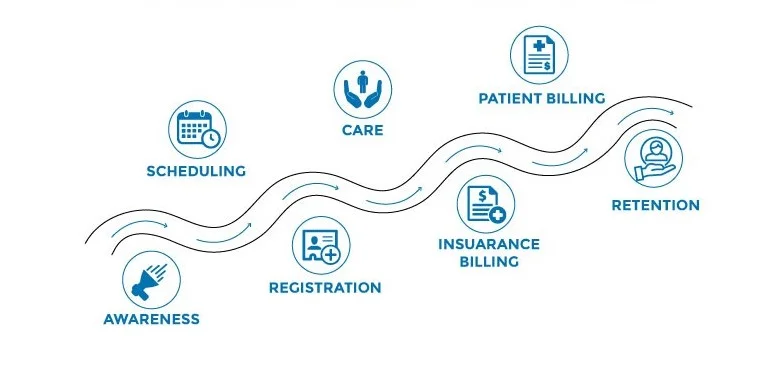
Patients today have more choices and are more informed about what they want in terms of care, they expect you to meet them on their terms, not yours. However, many health facilities are still compounded by painful interactions and avoidable uncertainties. These are augmented by cumbersome legacy systems, increasing demands and lack of a firm grasp on the patient journey by providers. Understanding the patient journey enables providers to redesign their resourcing and approach to care by developing an empathetic perspective of the patient’s experience. Not only is it key to improving patient care, but it is also an effective way of empowering staff to discover opportunities for improvement and innovation. What Makes Up a Patient’s Journey? A patient’s journey encompasses the complete spectrum of interactions or touchpoints a patient has with a particular health system, provider, or facility. These touchpoints can be either virtual or in-person and are often routine or high-stake. It is an ongoing process that involves all parts of the healthcare ecosystem, from specialty care to physicians, outpatient therapy and hospitals. It is essential to understand that all these individual touchpoints. When combined, regardless of their size—make up the patient journey and they include; Pre-visit The patients experience before they even step foot in your facility can provide them with a sense of comfort or apprehension. If their experience is frustrating or unclear during the pre-visit stage, it will set the tone for the rest of their interactions and expectations while they are receiving care. Visit Patients and visitors who experience unexpected delays, often experience additional anxiety and negative impressions about their visit. To mitigate this, facilities should ensure that visitors don’t incur extra delays when navigating their premises. Post-visit The post-visit experience plays a pivotal role in cementing a positive experience or countering a negative one. Measures such as post-appointment follow-up will go a long way in improving treatment plan adherence. Why patient Journeys are important 1. Improved employee satisfaction Improving the patient journey benefits the staff just as much as it does the patients. A competent patient journey minimizes paperwork, gets rid of redundant processes and eases pressure on your workforce, consequently increasing satisfaction and enabling a pleasant work environment. It also enables automation which helps staff to anticipate and proactively solve problems. 2. Improved communication between patients and providers Exchanging patient information and coordinating care can be a challenge for providers and frustrating for patients. This mismatch may result from organizational silos, incompatible technological systems, or a variety of other issues. Stress and anxiety can be reduced by trying to close the relevant organizational or technology gap. Negative patient interactions can often be blamed on poor or inconsistent communication. When a patient has an expectation that goes unmet, it creates a negative outcome. By being able to identify when these are most likely to occur, practices can work more efficiently. 3. Develop seamless and timely patient and family updates Families with loved ones in surgery or who are trying to get care often experience a great deal of stress. Making them wait for long periods for infrequent and vague queuing updates only adds to their woes. However, with a digital queue management system in place, patients and their family can obtain real-time and precise information, such as wait times, counter availability, and more through strategically placed displays. 4. Clear routes and directions across medical facilities Hospitals can be complicated to navigate—whether it’s finding the right entrance, finding specialists, or making your way to the cafeteria. By understanding the patient journey, facility managers can harness data and feedback to improve signage, make visible pathways, and use landmarks to help orient users and help patients and families access the resources they need. 5. Deliver insightful and timely visitor information It is essential that important health and wellbeing initiatives, such as getting vaccines and booking in for a screening with a doctor, are given due attention. Location-based messaging via digital signage in healthcare venues can help to educate the public on the importance of taking steps to improve wellbeing. 6. Reduce pain points There will always exist gaps in the patient journey that stand out negatively in their mind. Healthcare providers must understand these pain points as early as possible and identify opportunities for improvement. Health facilities can leverage feedback and customer experience portals to listen to their patients and act on pain points. By effectively mapping the patient journey, providers can take a proactive approach to a positive patient experience. It also illuminates opportunities to educate and inform patients on critical matters. 7.Keep patients safe The COVID-19 pandemic has highlighted the need for a patient flow management system that is both safe and effective. Healthcare facilities must adapt and be flexible to provide services while keeping everyone safe from communicable diseases. By using a virtual queuing system, patients can wait anywhere in the facility as they wait to be served. Contact between patients is much limited because they are not really waiting in line to be serviced. Conclusion Regularly reviewing your patients’ experience and investing in new technology can result in the continuous development of your procedures, clinical treatments, and other areas. This is where Q-SYS comes in; Our patient journey solutions such as Q-SYS CX portal gives medical facilities of any size the ability to optimize every facet of their patients’ journeys, resulting in a positive patient experience and enhancing operational effectiveness. Get in touch today and let us revolutionize your patients’ journey together.

Understanding Patient Journeys In Healthcare Management Read More »

Reasons Why Digital Signage Is Important To Your Business

Businesses today are a revolving door of continuous technological advancements. Technologies are constantly evolving, and businesses that fail to keep up are gradually sent descending into obscurity. One such technology that is quickly gaining prominence is digital signage. While traditional print signs have become a mark of advertising for generations, digital screens are fast replacing them, and it is not hard to see why. This blog article exhaustively dissects the reasons for this exponential shift towards digital signages. Leverage the power of video If a picture is worth a thousand words, then a video is worth a thousand pictures or maybe more. Video amplifies your messages in a way that static advertising can only dream of. They allow you to tell a story and bring a certain level of entertainment that appeases all audience personas. The luxury of video on digital is that it is comparable to having your TV channel; the content options are endless and at the mercy of your creativity.  Reduced perceived waiting time in queues. The most frustrating part of queues is the anxiety from having to guess when you are up to be served; even short waits can feel endless and daunting without proper communication. Digital signages help reduce the perceived waiting time by providing information such as the expected wait time, service time and working counters.  Moreover, digital signages can display entertaining or educative content to help engage waiting customers, especially when they are bored or impatient. This not only reduces frustration but also improves customer satisfaction. Better interactivity Interactive digital signages are a near-futuristic invention that makes shopping a magical experience. Picture a customer grabbing a product off a shelf, keying in the product code, and immediately having all the product information at their disposal, just as they would on a website. This information could be anything from dimensions to buying tips, customer reviews, and much more. You can take it a notch higher and let them rate the product/service. Team communication Harmonizing communication in any size organization can be a logical nightmare, a nightmare that can be easily resolved by strategically using digital signages in frequented rooms around the office. Rather than sending emails or paper memos, easily Keep your entire team abreast with new product launches, team meetings, changes to HR policies, team building activities, the latest news and much more via digital screens. They are more engaging and likely to grab attention and boost morale compared to text-heavy documents. By pairing digital signages with 3rd party sales tools, sales teams can easily keep track of their rankings on the big screen in real-time. When a deal is closed, everyone knows! Centralized control Multi-branch organizations often have offers specific to a certain demographic or location, so Q-SYS digital signage software allows you to create specific content for each branch from a centralized location. For large corporations, controlling your content from one point ensures that brand identity is consistent across multiple touchpoints.  More attention from passersby Digital signage’s vibrant, high-quality displays have proven to be highly effective in attracting passersby who may have never entered a brick-and-mortar business. While any display can attract attention, digital signages have a powerful advantage because they leverage motion and dynamic content. They deliver attention-grabbing content that raises the curiosity of passersby. Brand consistency While one of the fundamental benefits of digital signage is the capability to quickly and effortlessly implement new sales, offers and projects, it also provides an excellent opportunity to keep branding consistent across locations. This concept equally works in reverse; corporations can quickly retool their marketing efforts without going through the costly process of replacing traditional screens each time.  Additional opportunities Digital signages take some time-consuming responsibilities off your employees’ shoulders, letting them focus on increasing customer satisfaction. For instance, by using the screens to display loads of sales information, such as forex rates and upcoming events in healthcare, employees no longer have to repeat this information to every customer. Instead, they can channel their effort towards engaging customers in more meaningful conversations that lead to a loyal customer base. Conclusion Digital signage has proven to be a powerful tool for communication, education and driving sales. It acts as an intersection between the physical and digital worlds, effectively making your brick-and-mortar business an extension of the digital experience.  The possibilities are limitless with the right digital signage solutions. The team at Q-SYS strongly recommend that you reach out to our sales team for more information on how our solution can help improve the customer experience at your location.   

Reasons Why Digital Signage Is Important To Your Business Read More »

The future of customer experience in financial institutions

Customer experience is usually at the top of any financial institution’s priority list, yet it still remains a kind of amorphous, undefined notion. This poses a serious impediment because, in a world where many financial products are commoditized, customer experience can be a real differentiator. According to one study, banks and SACCOS that succeed in creating a customer-centric culture are more profitable than those not focused on it. It is critical to understand what consumers want from an experience and deliver it to them. Knowing what they want is not a one-and-done exercise, of course. And there are variables within markets and particular market segments. Organisations need to review their priorities and strike a proper balance between digital and in-person services. Here is a look at customer experience trends financial institutions need to consider seriously going into the future. The human connection Many financial institutions struggle when it comes to customer satisfaction. Financial services are typically one of the lower-ranked industries in customer satisfaction surveys according to many studies. Many financial institutions have put a focus on digital capabilities in order to improve the customer experience and thus, customer satisfaction. However, institutions shouldn’t forget about the human touch.  Deloitte found in 2019 that customer satisfaction with contact centres was closely linked to overall customer satisfaction with financial institutions. The Covid experience likely heightened that connection as more people turned to contact centres for non-routine issues. The same applies to the branch experience. With most routine transactions shifting to digital, it’s vital that when customers reach out by text, chat, call, or in-person with more complex issues, the staff and the technology backing them up match consumers’ expectations. Goodbye customer experience. Hallo customer science Financial institutions often talk about improving the customer experience, but the notion of customer experience needs to evolve. As channels become more integrated, the approach to customer experience needs to evolve too Customer Science basically combines technology, customer data, and artificial intelligence (AI) to create predictive models for customer satisfaction. The significant difference between customer science and customer experience is the behavioural science aspect of it. With all of these factors working together, customer science can help organizations anticipate customers’ needs and build experiences that meet them. Customer science will essentially predict what the customer will do next, not what they say they’re going to do next. Ultimately, customer experience is about improving customers’ lives and creating value. By embracing customer science principles, and anticipating customer needs, financial institutions can have a material impact on people’s lives. Community engagement and personalisation More and more, financial institutions are focusing on specific communities. This idea of niche targeting is set to play an even bigger role going forward, and traditional financial institutions should embrace it. Many financial institutions have struggled because they don’t understand which segments of their customer base want which products and services. For example, the niche targeting model in banking is inherently customer-first, and financial institutions can only put their customers first if they truly know and engage with them. Additionally, institutions also need to convey to customers how they are engaged with their local community. Increasingly, consumers are asking how all companies they do business with are affecting positive change. That has become an important element of customer experience. Conclusion The financial services business is quickly evolving with a focus on high-quality client experiences rather than just high-quality products. Many would dare ask if it is possible for organisations to keep up with the rate of change in the market? Our answer is yes. With future-ready solutions such as the Q-SYS customer experience platform, institutions can make customers feel valued while delivering measurable business results. Furthermore, With data analytics, the financial sector can bring employee experience data and customer experience data together to deliver improvements for both – positively impacting customer loyalty, revenue and profitability.

The future of customer experience in financial institutions Read More »

How To Deliver Great Customer Experience?

Why spend a lot of money on marketing initiatives when your existing customers can do the marketing for you? Great customer experiences are passed down to family and friends, and word of mouth does not cost you a single cent. There is no doubt that when done right, a good customer experience cannot be substituted. So how do businesses and organizations create this great customer experience? Here are a few ways of bringing a customer experience strategy to life. Proactive communication Reacting to customer needs after they raise a complaint is simply not enough. Instead of waiting for customers to reach out for complaints, attempt a more proactive approach and give clear communication well in advance through notifications and the digital signage. Anticipating issues in advance and going ahead to inform the customer gives a unique experience and makes the customer feel special. Track and address customer churn Customer churn refers to former customers who stopped using your product or service. Customer churn is a crucial metric for evaluating your business because it serves you the harsh truth about the quality of your goods and services. Obviously, businesses should aspire to have a zero-churn rate, but it is inevitable to lose a few customers over time. Consider following up on these customers and gather relevant feedback and insights. Use this feedback to analyze why they are leaving and how to improve customer experience. Create feedback loops Customer feedback makes organizations understand how customers view your service. It helps management teams to understand the gap that exists between customers’ expectations and their experiences. The key is to acknowledge every customer and employee feedback and act promptly to improve all stages of their experiences. To create a successful feedback loop, organizations need to connect and engage with customers at every stage of their journey. An omnichannel customer experience platform such as the Q-SYS CX portal can achieve this level of engagement and connection. Deliver personalized experiences One trick to achieve customized experiences for your customers is practising empathy and understanding their individual needs. Offering customized experiences requires an effective feedback collection and escalation model. Businesses can achieve personalization through; engaging customers on their preferred engagement channel, giving product recommendations based on past purchases and even personalized online platforms. Urge your customer-facing staff to listen to the customers and identify the various pain points compromising the individual customer journey. Use data and analytics Every business should develop a system of metrics that indicate the score of customer experience in their business. Using CX data and analytics, it is easy to track changes in customer experiences within an organization. Some of the metrics used to track customer experience include; Net Promoter Score (NPS) and the Customer Satisfaction Score (CSAT). Do not overlook the digital customer experience. With the increased adoption of online stores, digital customer experience has become just as important as in-store customer experience, if not more important. However, many brands are finding it hard to dial in on their digital customer experience due to the impatient nature of online shoppers, hence a great window for your brand to stand out. Delivering a great customer experience means providing a responsive, reliable, and effective experience on your online platforms. A reliable and consistent online experience delights customers and cements their brand loyalty. Conclusion It is easy to bridge the gap between customer expectations and their experience with proactive planning, empathy, and the right feedback channel. Of course, creating a good customer experience is not a one-button fix but investing in a good customer experience portal like Q-SYS Customer Experience (CX) Portal is the best place to start your journey to providing a great customer experience.

How To Deliver Great Customer Experience? Read More »

How technology can streamline the queuing process

Smart queue management systems are the way of the future, and technological innovations are being put to work in a bid to optimize queues. Organizations are under pressure to develop mechanisms to improve efficiency, productivity, and customer satisfaction. This article explores how technology can improve queue management for organizations. Discussed below are major ways that the implementation of sophisticated technology impacts the queuing process: Manage customer expectations When your customers must wait for their turn to be served, it can be difficult for a single customer to know how many others are ahead or behind them in the queue. After a certain amount of waiting, it’s easy to assume that everyone is ahead of them or even that people who arrived later have been allowed to go first. This is not good as it creates a bad experience for your customers. A customer’s perception of their wait is far more important than the reality of their wait, and technology can help tremendously in ensuring this does not happen. For instance, a queue manager can rely on modules such as digital signage to inform customers of their wait time as they enter a queue and move through it. However, the actual wait itself can be driven down through the help of such technologies. This is based on the fact that known wait times feel shorter than unknown wait times.  Improve the teams productivity Queue management systems have been proven to help organizations get the most value from their service teams. Such solutions can improve service teams’ productivity in businesses, cashiers’ in financial institutions, and medical practitioners in health facilities while reducing operational costs.  When technology is used appropriately to manage queues at the head of the line, customers can be notified of their turn more efficiently through text messages or the digital signage with little to no downtime for the service teams. More importantly, managers can monitor the productivity of the key staff members, ensuring that no back-ups occur unnecessarily.  The teams who are serving the customers have visibility on the number of people that are waiting, the time that they have been waiting for. The system also provides real time alerts when the number of people waiting for a service exceeds the threshold the same notification is also generated when the waiting time and serving time is exceeded..  Enhance customer experience Waiting lines are all about the customer – at least, they should be. Suppose a customer’s time in a waiting line doesn’t make up the crux of their experience with a business. In that case, it’s the cherry on their overall experience with a business, particularly in hospitals, finance or retail environments, where the line is the last encounter a customer will have before making up their mind about their overall experience with that particular organization.  Technology is changing the way customers wait in line. Many businesses opt for queue management technologies that eliminate or reduce the actual waiting line. This allows their clients to focus on other things as they wait for their turn to be served. The clients will then receive text alerts about when their turn in line is imminent, improving their experience interacting with your organization or business. Business intelligence for management teams  Technology provides critical metrics, such as real-time monitoring to managers to help them understand what is happening in a queue. Management teams can track aspects of queue management instantaneously and make appropriate decisions to ensure things are in order. For example, they can know if customers have to wait for long periods to be served, if queue volume suddenly shifts, if agents’ productivity is in question, or if any mishaps occur within a line that could affect overall customer satisfaction. Alerts can be delivered via text, or email so that alterations can be made immediately. Conclusion Technology, which is the answer to so many things in our modern society, is clearly one of the reasons why some businesses excel in queue management and others do not. Implementing the Q-SYS Queue Management System and Customer Experience (CX) solution can give your customers something new to appreciate. Improving queues enhances the customer’s experience while improving your team’s overall productivity. When everyone’s life is made easier, businesses can focus on what truly matters — their customer service. Contact us for more information.

How technology can streamline the queuing process Read More »

Optimizing business through smart queue management analytics

Sure, colorful charts and graphs are wonderful to look at, but how do you turn these insights into profit? Every business is data-driven, and proper collection and utilization of insightful data is at the core of successful enterprises. Here we take a look at how you can use queue management analytics to optimize your business. Monitor your performance in real-time Real-time customer volume is one of the most important statistics in any queue management system. They help you understand the functioning of the waiting rooms, customer behavior and the swift adjustments you need to make to provide a comfortable environment to your customers. Queue management analytics does not just show the raw number of visitors in the facility; it provides a detailed report of the footfall at a particular time. Real-time occupancy and flow pattern reports give insight on strained resources and other emerging bottlenecks for effective and immediate action. There is a need to effectively manage flows to ensure great customer experience and maximum staff productivity from arrival time to feedback and exit. Compare the performance of different branches. Smart queue management analytics give a comparison efficiency report between branches linked to the system. These analytics empower managers to compare services, traffic and wait time across affiliated branches for easy decision making. Managers can use these comparative reports to streamline customer experience and standardize services across all branches. Listen to customers Customers are happier and likely to spend more money when their grievances are listened to. Feedback greatly fosters business-client relationships, from simple comments to satisfaction ratings and simple questionnaires. Integrated customer experience portals provide customized means of collecting customer feedback. The system retrieves and processes all the information filled by the customer after the service, analyzes this feedback and summarizes them into detailed, actionable reports. The Q-SYS customer experience portals can escalate customer feedback to the appropriate department for action through a pre-set escalation matrix. The relevant officer can then reach out to the individual customer and solve their grievances using the contact details provided. Anticipate gaps in service delivery The most important challenge for floor managers is to improve service delivery without jeopardizing customer experience. Detailed analytics is the best way to identify flaws and weak points in your business. Reports such as staff performance, time per ticket, customer waiting time, cancelled transactions and how satisfied your employees are, give the manager an idea of areas that need improvement. After implementing changes to eliminate the deficiencies, the managers can generate a custom comparison report to see the progress of their changes. This enables them to gauge the effectiveness of their policy changes. Optimizing operational efficiency Queue management analytics provide the management with tools to predict customer patterns based on past trends. By looking at these insights, the managers better understand their customer behavior, traffic flow and other relevant patterns. From this available data, the management can optimize their resources to deliver quality services. Based on past trends, the management can take proactive measures such as optimizing floor layout, streamlining traffic flow and increasing the number of staff and resources during peak hours. By predicting and preparing for peak hours in advance, businesses can cushion themselves from panic resulting from unpreparedness. Determine the effectiveness of marketing initiatives It is logical for the marketing department to analyze footfall and customer feedback to improve marketing efficiency. Thanks to the digital signage module, the marketing department can target more people from the customer footfall report by rolling out their most important campaigns during peak hours. Marketing managers can continuously replicate the most effective campaigns to boost revenues by linking footfall counters reports to data analytics software and POS systems. Conclusion Now that you know how to optimize your business through smart queue management analytics, the one question remains: How do you effectively and comprehensively collect this data and generate reports? Smart queue management Systems like Q-SYS will help you manage your queues, collect customer feedback and generate custom reports.

Optimizing business through smart queue management analytics Read More »

How Customer Experience (Cx) Programs Can Benefit Organizations

An effective customer experience (CX) program can enable organizations to identify critical customer issues, enhance complaint management, reduce churn, and increase customer loyalty. But have you considered how customer experience insights might also give rise to ideas for new products or services? How about repositioning your brand? Well, we shall look at ways in which an effective CX program can facilitate business growth. Identify ideas for new products and services. Developing products and services often starts with research to explore customers’ reaction to concepts. But customer comments from a CX program may also provide this information. The resulting ideas can be subjected to further qualitative research and developed into new products or offerings, resulting in new business lines. Understand unique customer segments A detailed understanding of patterns in customer behavior may lead to new and different ways of engaging customers while instilling customer loyalty. The analysis of insights gained from a CX program can help organizations identify different customer segments. This segmentation enables them to offer custom solutions to the various customer segments, increasing customer satisfaction. Increase awareness of products and services Customer experience data provides information on how customers learned of a brand or highlight gaps in product/ service awareness. When put together, this information can help organizations to advertise and promote their businesses more effectively. Refine the brand position Insights from CX programs allows organization to examine customers’ perspectives of what makes a brand unique. This data is critical in identifying opportunities to refine a business’s unique value proposition and brand promise. Conclusion While CX insights may not address all of these needs directly, it’s a great starting point. The important thing is to stay open and alert to new and emerging information from customers. The Q-SYS Customer Experience (CX)Portal is a great solution to help organizations achieve this affordably.

How Customer Experience (Cx) Programs Can Benefit Organizations Read More »

Top Customer Experience Trends In 2021

According to many studies, organizations with stellar Customer Experience (CX) programs are generally more profitable and sustainable. In fact, CX is the top priority for many companies in 2021, unlike in the past. Here are essential CX trends to be aware of to stay ahead of the competition. Continuously improve on your products & services. CX transformation is a journey, not a destination. The right CX platform enables businesses to entrench a continuous improvement culture in their processes for better customer experiences. Hyper-personalize experiences Consumers want personalized experiences more than ever, and big data analytics provides the findings to make this possible. Organizations can achieve this by segmenting their marketing campaigns based on consumer characteristics. Create omnichannel convenience  Consumers prefer to get things done quickly, efficiently, and all in one place. Omnichannel customer experience has become a non-negotiable expectation for most customers. Businesses that deliver great omnichannel experiences in line with customer expectations and requirements have better chances of success. A balance between automation and human intervention Moving to a more customer-driven CX program requires serious buy-in on the part of the employees. People are still crucial to the service aspect of CX, and striking a balance will provide the best customer experience possible. Conclusion While there’s no one-size-fits-all solution, giving a voice to customers comes down to being analytical and empathetic towards the customers’ motivations. The Q-SYS Customer Experience Portal enables businesses to deliver consistent, seamless, and personalized customer experiences across all touchpoints, channels, and interactions with relative ease.

Top Customer Experience Trends In 2021 Read More »

Easing patient journeys in hospitals with Electronic Queue Management solutions for Africa

Budget constraints, limited resources, and competing priorities remain the leading challenge amongst healthcare providers across the continent of Africa. With this combination of pressures, comes the need to streamline workflows and increase efficiencies in hospital operations. There is empirical evidence that easing patient journeys is one such process that can help health providers improve the quality of their services. We shall explore how targeted innovations in queue management can be leveraged to deliver greater patient experiences. Queueing solutions   In the wake of COVID-19, there is an increased need for queue management systems that can handle patient flows safely and efficiently. The benefits that accrue from such an investment are significant. In the short term, it can improve productivity whilst substantially decreasing costs by ensuring that the right patient is at the right place at the right time. To do this effectively, hospitals need to visualize the patient journey with a view of eliminating bottle necks and make the process of seeking treatment efficient and intuitive. The more seamless an experience you can create, the better the customer experience will be. Mapping out the patient Journey   A patient journey is basically the steps that patients go through when they undergo a visit / treatment in the healthcare facility. Critically important in the understanding of patient journeys is that it consists of several stages (pre-, during, and post-visit), where each stage has one or more touchpoints. Through patient journey mapping, healthcare providers can identify pain points and work on the solutions to these problems. Many accredited studies have found that reduced queue times are critical and valuable to a patient’s perception of a hospitals. So, why is easing patient journeys important for hospitals? Below, I have summarized four reasons. Reducing costs A queue management system opens up opportunities to reduce costs throughout the patient flow by making every step of seeking treatment more effective. Improving the patient experience With a queue management system, you can achieve optimal waiting times, reduce perceived waiting times and improve the patient’s overall perception of the services in your hospital. Increasing staff satisfaction By streamlining the patient flow and making it more efficient and structured, a hospital queue system can increase staff satisfaction by simplifying the process of service provision. Collecting important data New generation queue management systems can capture important patient information – helping you to enhance performance while opening up opportunities for benchmarking. Conclusion In essence, the scope of a queue management system exceeds that of a simple queuing instrument. Whereas its main beneficiaries are health professionals, hospital management teams can reap the benefit as well in terms of patients’ insights and creating measurable efficiencies. A hospital queue system such as Q-SYS simplifies the work of administrators and what’s more, is that the changes in patient experiences happen almost right away.

Easing patient journeys in hospitals with Electronic Queue Management solutions for Africa Read More »

Changing Face of Queuing: Living with the New Normal

The world today looks, thinks and behaves differently as compared to 6 months ago. COVID-19 has initiated changes across sectors and impacted lifestyles and livelihoods. These changes are a direct result of high transmission risk through contact and close exposure to COVID-19 infected individuals. Businesses are striving to restart operations from their commercial spaces as opposed to the virtual. However, the threat from the virus still looms large, and is here to stay until a vaccine is available. In these challenging times, it is imperative for businesses to adapt to the new normal to function with minimal risk. For businesses in the non-service sector, the risk is primarily for employees, and the potential few visitors. However, for the service sector, the risk is two-fold, with employees and patrons being at risk due to unavoidable direct transactions. In this scenario, streamlining crowds through optimal queues becomes critical for social distancing, especially in service organizations. Employing a queue management system facilitates a positive transaction experience for both patrons and staff, since there is no worry about overcrowded spaces or unnecessary contact. The following are some of the features of a queue management system that are in the spotlight for their functionality to aid social distancing and minimize contact during these COVID times. 1. Virtual Queues As the name suggests, virtual queues facilitate waiting sans lining up and elbow jostling in physical queues. With a queue management system, patrons are allotted staggered time slots and receive notifications regarding their status in the queue. Patrons can check the queue length and their position in the queue and plan their visit accordingly. This results in minimized waiting time and reduced crowds, and in turn minimal exposure. 2. Contactless Ticket Generation Once inside your facility, customers or patrons can collect their tickets from the reception without swiping or using touchscreen kiosks. This contactless ticket generation eliminates multiple customers touching the same surfaces repeatedly, a potential risk in coronavirus transmission. Likewise, employees need not worry about being in contact with surfaces touched by multiple customers or patrons. 3. Customization The queue management system can be customized based on the industry in which your business functions (for e.g., retail service), your business offering, your business location(s), business size, etc. Additionally, Counter Display Units can be tailored to share and display COVID-19-related messages, safety notifications or new guidelines adopted by your center in lieu of the pandemic. Adapting is the first step to surviving. We at Q-SYS have customized our queue management systems to meet the present day challenges to support your business during the new normal. Learn more with us.

Changing Face of Queuing: Living with the New Normal Read More »

How Can Digital Signage Improve Queue Management

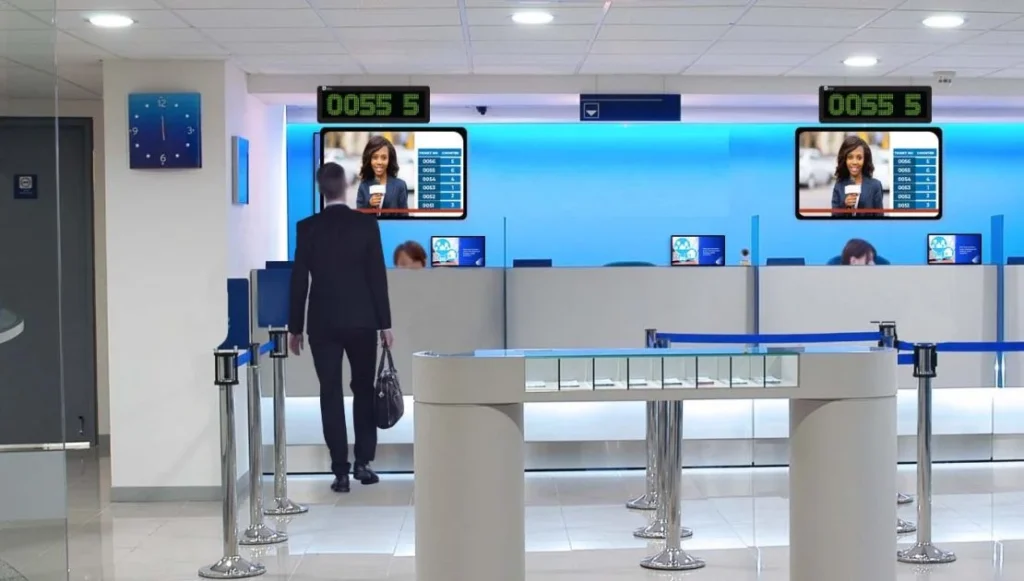
While customers are waiting in queues, they mostly have little else to do apart from, well, wait. And for the new-gen customers who thrive on instant gratification, waiting is frustrating – be it in banks, retail stores, government offices, or other outlets in the service industry. Here’s where queue management systems that utilize Digital Signage play an important role by reducing the perceived waiting time and customer impatience, and subsequently enhancing the overall customer experience. In addition to the simple play on the customer psyche by employing visual engagement to reduce perceived wait time, digital signage also offers other benefits for consumers and organizations and facilitate a positive transaction experience: 1. Informs Customers Digital signage improves customer experience by relaying relevant information through visual display. These could be related to the queue status and counter availability, product or service features, promotional offers, public awareness information or other content. The content can be customized according to the industry – for example, retail stores display products that result in impulse buys. Banks and government offices can display updated guidelines to ensure customers/users are in the right queues with the right documents. 2. Engages and Entertains Digital signage enables organizations to broadcast programs that engage and entertain customers, thereby reducing the perceived wait time. Customers waiting in a queue are the ideal attentive audience, ready to watch and absorb visual content. Visual entertainment – travel programs, documentaries, content relevant to the particular industry or business, etc. are usually apt to keep customers occupied and dim the impact of the queue length and the monotony of waiting. 3. Allows Organizations to Advertise Awareness creation about products, brand, brand value, etc. is the first step to enhancing revenue and business. Digital signage is the perfect platform for businesses to create this awareness. Organizations can leverage the idle eyes of waiting consumers and display product-related information that can help in up-selling and cross-selling. Other relevant information about the organization such as inception, core values, vision, etc. can be displayed to create a deeper connect with customers. 4. Improves Employee Efficiency Customers are aware about their queue status and counter availability through display screens hence they do not need to approach employees to address these queries. Displaying counter information and ticketing status streamlines queues and allows service counter staff to focus on their core tasks. By checking interruptions and distractions, employees at the counter are able to offer quality customer service, faster. Employees who can focus on the core task at hand are less perturbed and more likely to engage in a pleasant exchange with waiting customers. Considering the multiple benefits of a queue management system with digital signage, isn’t it time to make the switch now?

How Can Digital Signage Improve Queue Management Read More »

5 Reasons Why Queue Management Is Important

Ever had a bad experience waiting in a queue? Be it someone jumping the queue or getting serviced before turn, you likely remember how enraged you were at the incident. While the specifics might fade over time, how you felt will likely remain with you. It is this feeling that forms the crux of customer experience in today’s competitive industry, and acts as the key differentiator in customer loyalty. Efficient queue management creates a sense of fairness and order. It eliminates the temptation to ‘book’ a spot or form multiple lines that lead to the same counter. Worse, you won’t have to wait in a long queue just to reach the counter and realize you were in the wrong queue! Therefore, intelligent queue management is a significant step towards enhancing the customer experience journey. Let us focus on 5 reasons why queue management can make or break your business: 1. Enhances Customer Experience Electronic queue management systems enable real-time updates to notify customers regarding their queuing status, approximate wait time and service counter number. Entertainment/advertisements reduce perceived wait time, and electronic queuing allows movement while maintaining the position in the queue. These simple yet considerable measures improve overall customer loyalty. 2. Creates Opportunity for Feedback A comprehensive queue management system facilitates a platform for customer feedback. Customers can share feedback about their experience through the feedback feature in the queue management system. Administrative decision makers or business owners can use the feedback effectively, and employ insightful inputs for better organizational decisions. 3. Streamlines Operations Your employees can gauge the number of customers waiting to be serviced, and open more service counters if required, using information from the queue management system. Service teams can be optimized and employee efficiency strengthened by accurately determining average customer footfall in advance. When employees are able to anticipate customer volumes and predict service times, their stress levels also reduce. 4. Provides Insightful Data Queue management systems make available data about customer footfall, percentage of customers serviced per counter, average service time, etc. This data can be analyzed to determine employee and team efficiency, center/branch performance, comparison of teams and centers, and more. Subsequently, it results in better operational decisions such as space and resource optimization. 5. Bolsters Professionalism Customers know you take them seriously when you value their time and offer repeat-worthy experiences. Automated waiting and service counters augment professionalism vis-à-vis paper-based systems. Agile queue management systems allow display of product features, up-selling and cross-selling. In a comprehensive queue management system such as Q-SYS, a single server acts as the central access for all customer flow management information. The advanced server ensures ease of accessibility and flexibility. Crafted with multiple functionalities, Q-SYS queue management systems are customizable and suitable for versatile business and commercial environments. Invest in the right queue management system for your business and garner multiple benefits!

5 Reasons Why Queue Management Is Important Read More »

Scroll to Top